Published 2025-12-11
tag(s): #yell-at-cloud #link-post
I mentioned somewhat recently that the RSS aggregator is changing my habits. One of them (I am
not the only
one) is that I've been "hoarding" more links.
Because now I can save links to re-read/to reply/to comment on later...but then I don't write
a reply post nor add my comments on the topic, the list keeps growing and growing.
(I do re-read the ones I mark for that, at least)
The other side effect is that I am (apparently) endlessly behind in my reading list. =D
Anyway, I just saw something that was too serendipitous, and here we are.
The one that pushed me to just do a reply post grouping a few links.
What are the odds that the day before I write my rant on why I
don't want to get too much into tea, Jack
Baty shared this
great post that says basically the same, but in a better and more profound way?
And what are the odds that I got to this link today? Anyway...
You can tell the original is better written from the titles: "Don't get much into X" vs Westenberg's "Don't become a connoisseur" 🙃
If I had been on top of my links, I could have shared the very same post and say "this is why..." :)
Last week, I left work with a small group, and as we walked to the subway we were discussing
the changes the company has been going through in the last 5 years (even before I joined).
That led to the topic of old timers. Like, people who have been 30+ years here.
And there's a subset of them that are what some would call "stuck" in a role, for decades.
Except that...are they really stuck?
For about two years, I played the role of a "manager". I did OKish at that
role.[1] On paper, my next position was demotion. Except that I
was so happy to go back to coding full time.
We desperately need to revisit the definition of corporate success. Things like The Peter principle (and The Dilbert Principle) are a known thing. And yet there's an implicit expectation that success only means "going up", rather than giving the best version of yourself to the organization.
Kev Quirk had a similar realization not long ago, and he found a little story (parable?) that encapsulates these thoughts very well.
The original (short) post is worth a read. It is funny that I read "Grow slowly, stay small" last week, and taking a second look now, the part about dedication to improving your craft relates to my rant yesterday...
Ruben Schade shared the nightmarish mark up that's coming out of so-called modern websites in "Tag Soup".
And that's why I didn't want to use any tool to generate the mark up for this site. 👀
Is that too extreme? Probably.[2]
I mean, yes, you can get a script or framework to generate that. But what happened
to Programs must be written for people to read, and only incidentally for machines to
execute.
?
Web development is baffling. And may I point out that I used to write ASP.NET WebForms for a
living, so I have first hand experience with dumping a of ton generated HTML in a browser. I
know it is a royal PITA to debug, style, etc.
I don't doubt that modern frameworks are miles better and more mature than 2004 WebForms. But
there's no way that tag soup doesn't come back to bite you sooner or later.
Why is it so hard to people in the web space to just write code?
I remember when two way binding frameworks were starting to become a thing. Sure, you saved
the effort to typing document.getElementById("someField").text = "the
value"[3], but for that you added a bunch of non-standard tags,
a crapton of JS...and as soon as you deviate from the "happy path" you still need
custom code to handle those specific scenarios. Usually fighting against your framework of
choice.
And before anyone says that this is because I am old, I will like to point out I was an early
hater of two way binding. 😌
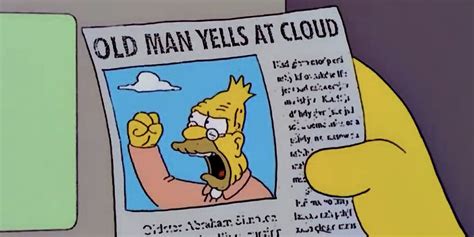
I mean, yes, I am old. And grumpy.
But...I was grumpy before being old.
You know what? This paragraph does not help me. Time to wrap it up >_>.